
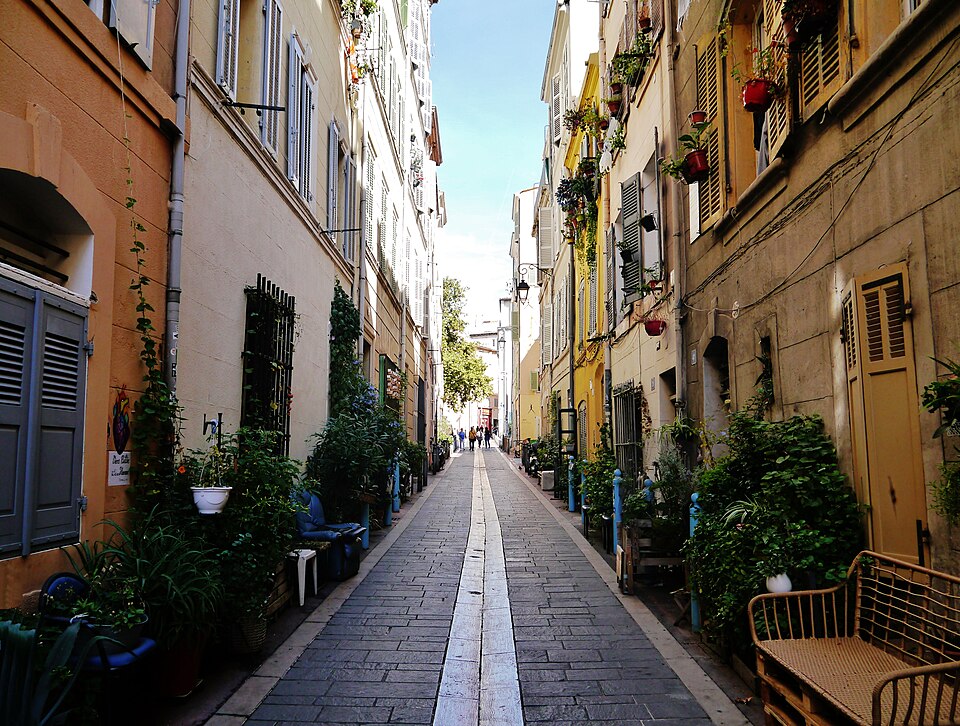
Windmills have disappeared, but their name remains. A former poorhouse now houses museums. Behind a charcuterie sign, there is now a tapas bar. In Le Panier, buildings take on new lives while keeping traces of their past.
The stories behind the names
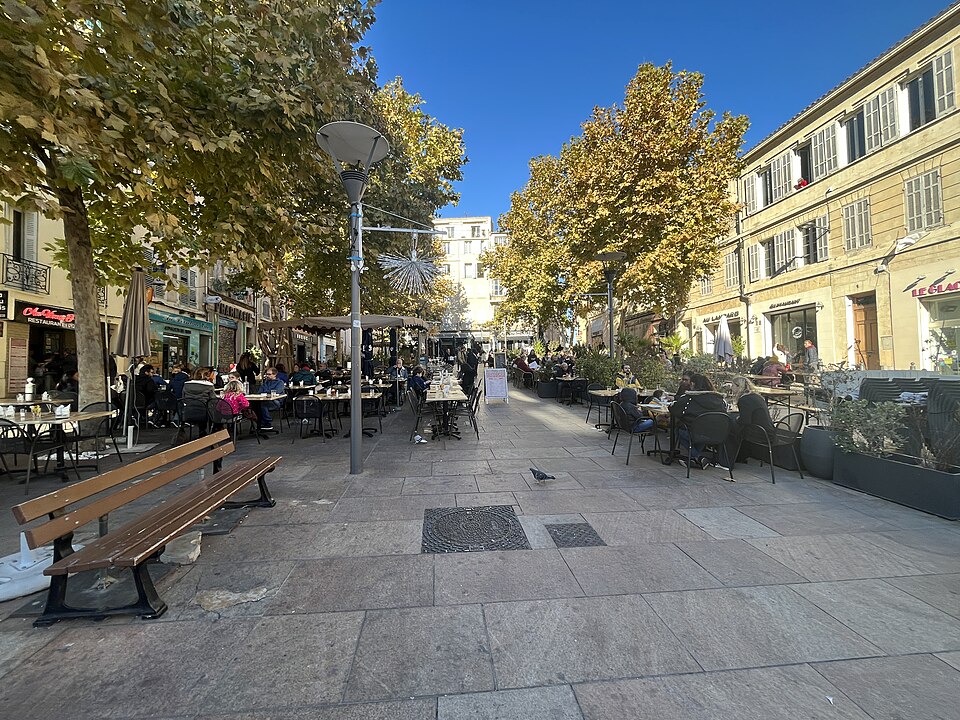
Place de Lenche takes its name from the Corsican Lincio family, who traded in coral here in the 16th century. Higher up, Place des Moulins recalls another trade: around fifteen windmills once stood on the hill. These names keep the memory of the neighbourhood’s merchants and craftspeople alive.
The Vieille Charité: from poorhouse to museums
At the Vieille Charité, three levels of galleries surround a courtyard with an oval-domed chapel at its centre. Pierre Puget, himself from the neighbourhood, designed the complex in the 17th century to confine the poor. It later became a home for those in need, then provided housing. Today it welcomes museums and exhibitions.

Centuries side by side, facing the sea
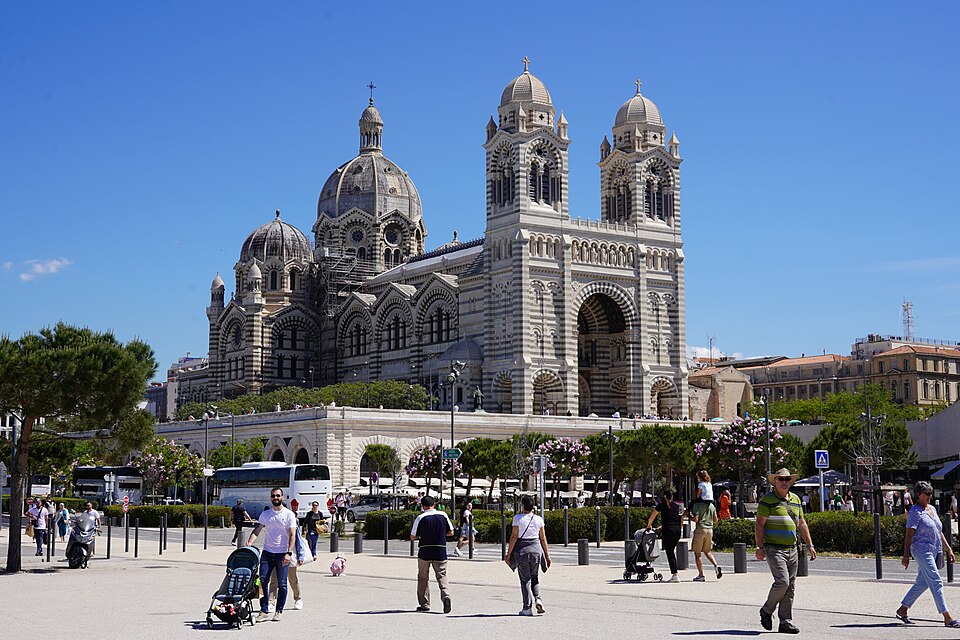
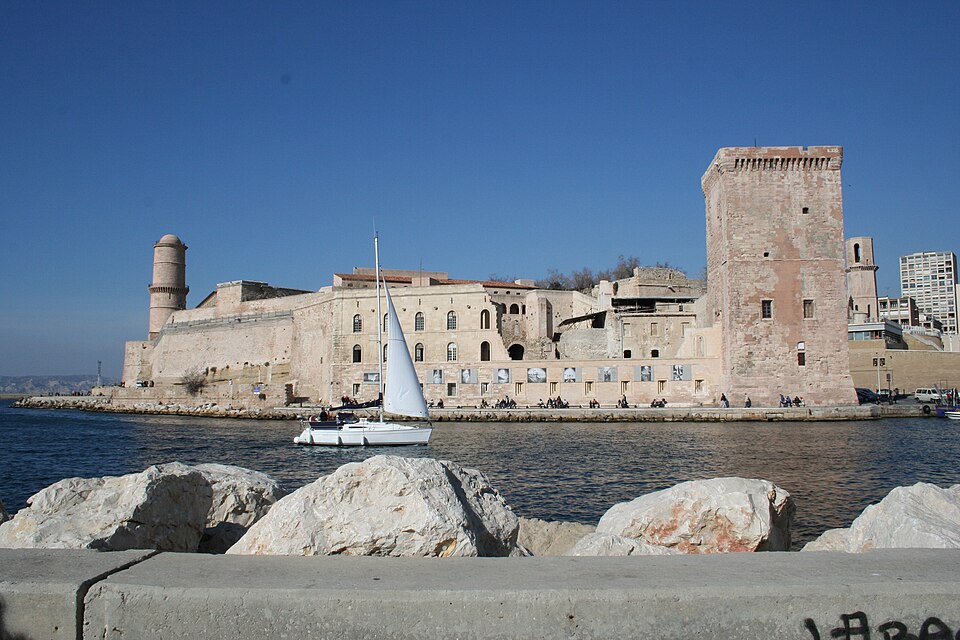
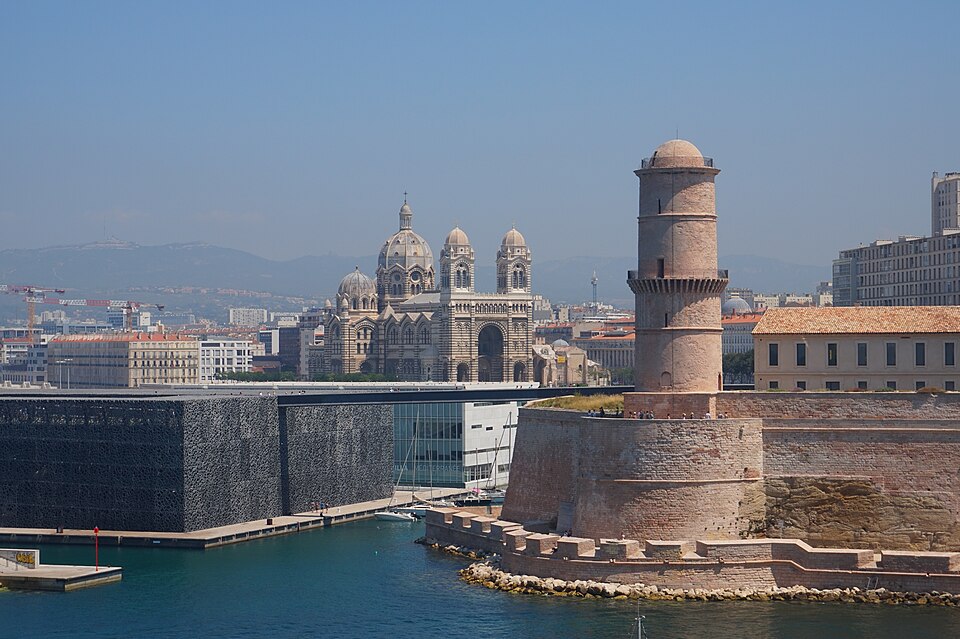
Around La Major and Fort Saint-Jean, the landscape takes on a different scale. In 2013, the Mucem added the concrete lattice designed by Rudy Ricciotti in collaboration with Roland Carta. A footbridge links the museum to the fort. Old stone and contemporary concrete meet on the Mediterranean shore.
At number 14, the sign remains
At 14 rue du Panier, the word “Charcuterie” on green tiles recalls the former family shop. Quentin Di Carlo opened his tapas bar here. Come for dinner after visiting the museums, or arrange to meet friends in the neighbourhood.
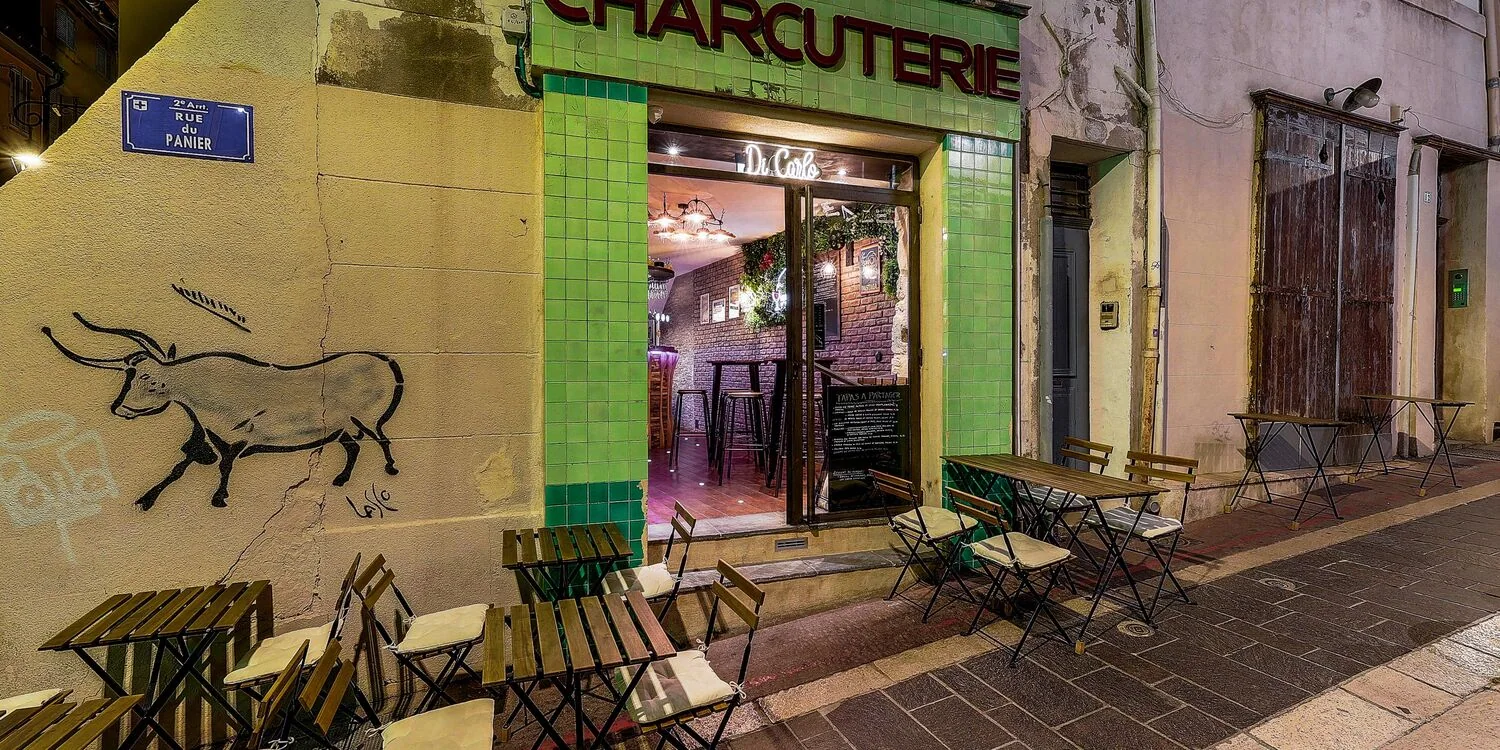
DiCarlo welcomes you at 14 rue du Panier, Wednesday to Sunday, from 6 pm to 11 pm.
Credits photos
- Rue du Petit-Puits in Le Panier — Zairon · Wikimedia Commons · CC BY-SA 4.0
- Place de Lenche — Benoît Prieur · Wikimedia Commons · CC0
- The Vieille Charité, a stop on a walk through Le Panier — Charlotte Noblet · Wikimedia Commons · CC BY-SA 3.0
- La Major cathedral — Remontees · Wikimedia Commons · CC BY-SA 4.0
- Fort Saint-Jean — Robert Valette · Wikimedia Commons · CC BY-SA 3.0
- The Mucem — Olena Ilnytska · Wikimedia Commons · CC BY-SA 4.0


